It hides what paint magnifies
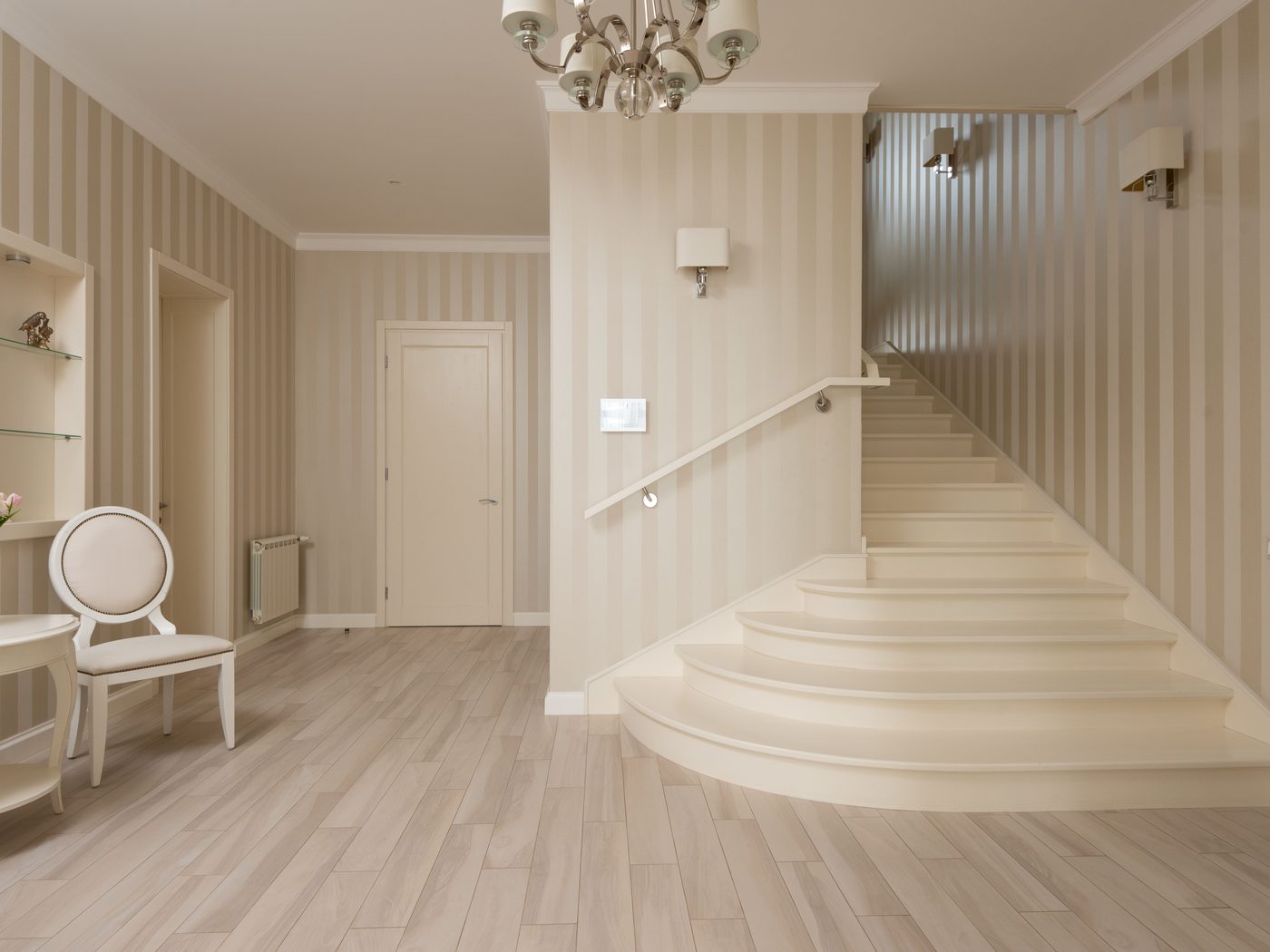
Patterned coverings are wonderfully forgiving with imperfect plaster, drywall seams, and the small dings any wall accumulates over a decade of life.
Measure once, dream big, and let the math handle the rest. A friendly little estimator for your next pattern-forward room — plus everything we wish people knew about wallcoverings.
Start measuringPop in your room dimensions, the size of your roll, and we'll do the arithmetic. We add a 15% pattern-match buffer by default — you can dial it up for big repeats.
All four walls? Just one accent? Give us the perimeter (sum of every wall you're covering) and the ceiling height.
to cover your space, with buffer included.
Paint gives a room a mood. Wallcovering gives it a story. Where a coat of latex offers a single flat note, a covering brings rhythm, depth, texture, and the unmistakable feeling that someone chose this room — that it wasn't simply rented to a beige.
Modern wallcoverings have come a long way from the peeling florals you remember from your grandmother's powder room. Today's papers, vinyls, grasscloths, and peel-and-stick films are durable, washable, often removable, and printed in ranges that span every aesthetic from quiet linen-look neutrals to maximalist hand-blocked botanicals. They hide imperfect drywall, dampen sound, add subtle insulation, and — crucially — they last. A well-installed paper can hold up for fifteen years or more, where a painted wall is begging for a touch-up by year three.
Patterned coverings are wonderfully forgiving with imperfect plaster, drywall seams, and the small dings any wall accumulates over a decade of life.
Quality vinyl and non-woven papers can shrug off scuffs, hand prints, and the occasional toddler. Many are scrubbable; some are even bleach-cleanable.
A single accent wall in a bold print does what gallons of paint can't: gives the room a clear focal point, a sense of intention, and a distinct point of view.
Non-woven papers are the modern default — dimensionally stable, paste-the-wall application, removable in a single dry strip. Vinyl coverings are the workhorses of kitchens, baths, and high-traffic hallways: scrubbable, water-tolerant, and forgiving. Grasscloth is woven from natural fibers (sisal, jute, arrowroot) and adds quiet, room-defining texture; it shows seams by design, which is part of its charm. Peel-and-stick has matured into a genuinely good renter-friendly option for short stays and accent walls.
Every patterned covering has a pattern repeat — the vertical distance after which the design starts again. A small repeat (under 6 inches) wastes very little material. A large repeat (24 inches and up) can mean throwing away a foot or more from each strip just to align the design. Repeats also have a match: straight match (each strip identical at the seam) or drop match (every other strip shifts by half the repeat). Always — always — buy a little extra.
Wallcovering happens in vertical strips called drops. A skilled installer maps drops before any paste touches the wall: centering a focal pattern over the bed, balancing partial drops on either side of a chimney, hiding the inevitable mismatch behind a door rather than over the sofa. This is the part of the job homeowners undervalue and pros earn their fee on.
Wallcoverings are printed in batches called dye lots or run numbers, and color can drift subtly from one lot to the next. If you need to re-order mid-project because you came up short, the new rolls may not match. The fix is simple: measure carefully, add a buffer, and order everything together. (See: this calculator.)