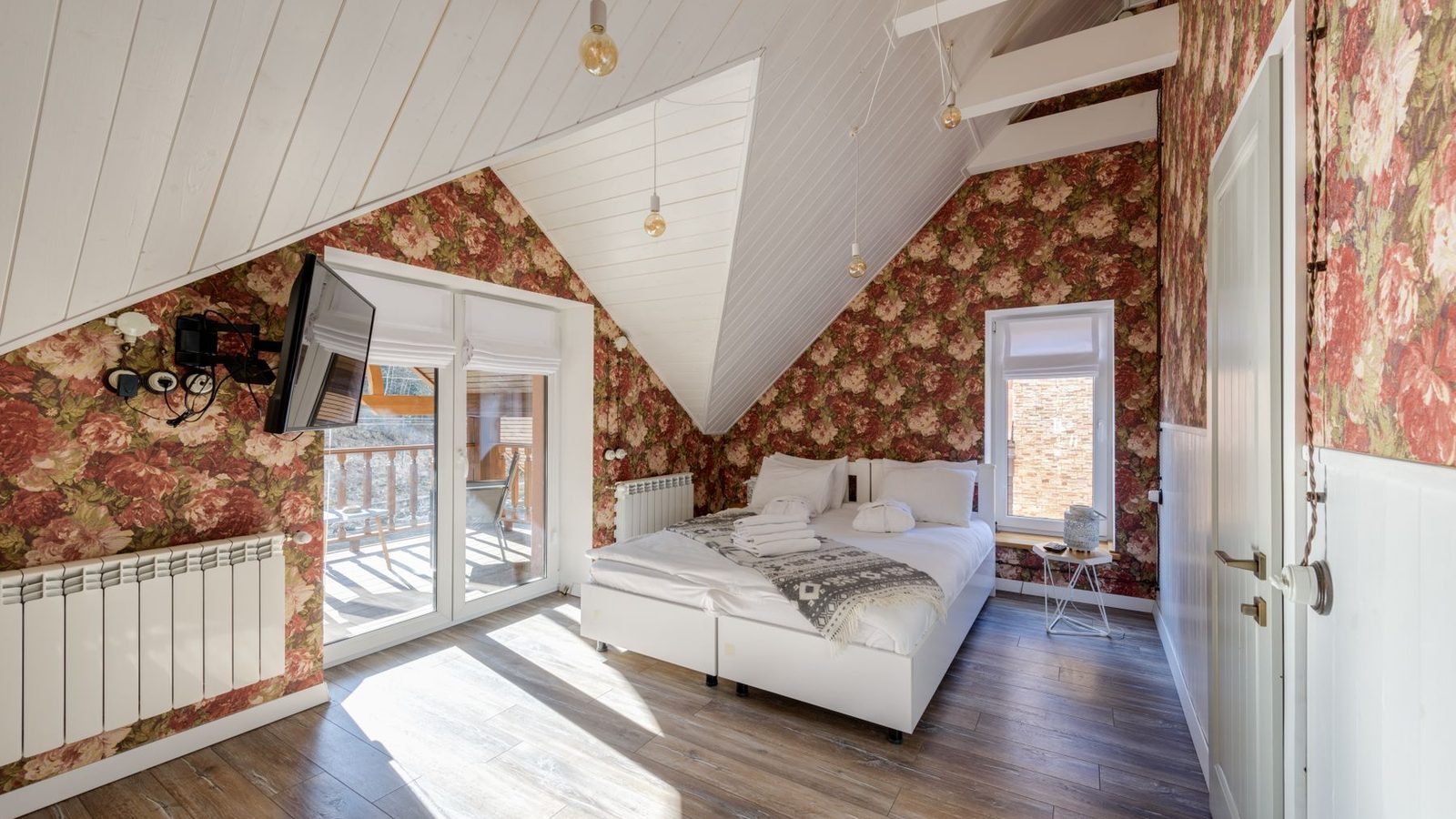
To cover a standard 12 ft × 9 ft accent wall (about 108 sq ft) with a small-repeat paper on standard US double rolls, you'll need about 3 double rolls. That is 8 strips across the wall, 3 drops out of each 33 ft roll once you allow 6 in of trim at each end, plus a 10% buffer for miscuts. Enter your own numbers below for an exact count and a supplies list.
All four walls or a single accent? Give the total width you're covering and the ceiling height.
Want to see how this number is worked out? Every formula, buffer and product dimension we use is published at how we calculate.
Wallpaper is printed in batches. Two rolls of the same pattern from different dye lots can differ subtly in colour — invisible in the shop, obvious on your wall. Buy all your rolls, plus your buffer, in a single order so the lot numbers match.
On a patterned paper, each strip has to line up with its neighbour. To make the pattern meet, you trim off part of the top of every strip — that trimmed length is the pattern repeat. A big drop-match repeat can waste a foot or more per strip, which is exactly why the buffer above climbs with your repeat.
Running short mid-project is the classic wallpaper heartbreak: you re-order, the new rolls are a different dye lot, and the seam shows. A roll of overage kept for future repairs is cheap insurance.
Divide the total width of the walls you're covering by the roll width to get the number of strips. Divide the roll length by your ceiling height plus the pattern repeat plus 12 inches of trimming allowance to get strips per roll. Rolls = strips needed ÷ strips per roll, rounded up, plus a 10% buffer for miscuts. The calculator above does all of this for you.
Add roughly 10–15% for small repeats, and 20% or more for large drop-match patterns. Every strip is trimmed to line the design up, so a bigger repeat means more waste — slide the buffer up accordingly.
US wallpaper is priced per single roll but usually sold as a double roll — two singles on one bolt, about 56 sq ft. The longer continuous length means fewer seams and less waste, so double rolls are the norm.
Only lightly. You still hang strips across openings and trim them out, so most of that material becomes waste. Subtracting a whole door or window often leaves you a strip short — we treat openings as a small credit, never a full deduction.